
Upcoming Projects
Watch our social media for upcoming projects
IG https://www.instagram.com/daphneartcentre
FB https://www.facebook.com/daphneartcentremtl
Past Projects
Kwahrharatstén:ni | Promesse | Promise
June 17 - September 30 2026

daphne is excited to announce that our project with co-founder Skawennati has won the Montréal Arts Council (CAM)’s very first temporary public art competition, established to mark the organization’s 70th Anniversary! Titled “Kwahrharatstén:ni | Promise”, it will be innaugurated on Wednesday, June 17, at 12:30 pm! The giant columns at the Maison du CAM (Gaston-Miron Building) will be wrapped in colourful patterns of corn, beans and squash, paired with an Augmented Reality piece. You will be able to experience it all summer, day and night, until the end of September. If you’re taking a stroll at the park Lafontaine, head to the CAM and scan the QR code to see the Three Sisters rapping about their current mission!
Additionally, as of June 19, for a short time, a large photograph of the Maison du CAM will hang in our gallery, along with a QR code, that, when scanned, will allow you to experience the Augmented Reality component of her piece, almost as if you were at the CAM!
Known for her innovative use of digital media to imagine Indigenous futures, Skawennati brings together traditional knowledge and emerging technologies in this new site-specific artwork.
daphne is proud to have supported Skawennati, one of our co-founders, in realizing this new artwork. This project was commissioned by the CAM and is administered by daphne and co-produced by AbTeC.
tsi iotnekhahtentiónhatie - éntie nonkwá:ti [where the water flows - south shore / là où coulent les eaux - rive sud]
11.09.25 - 07.02.26
![]()
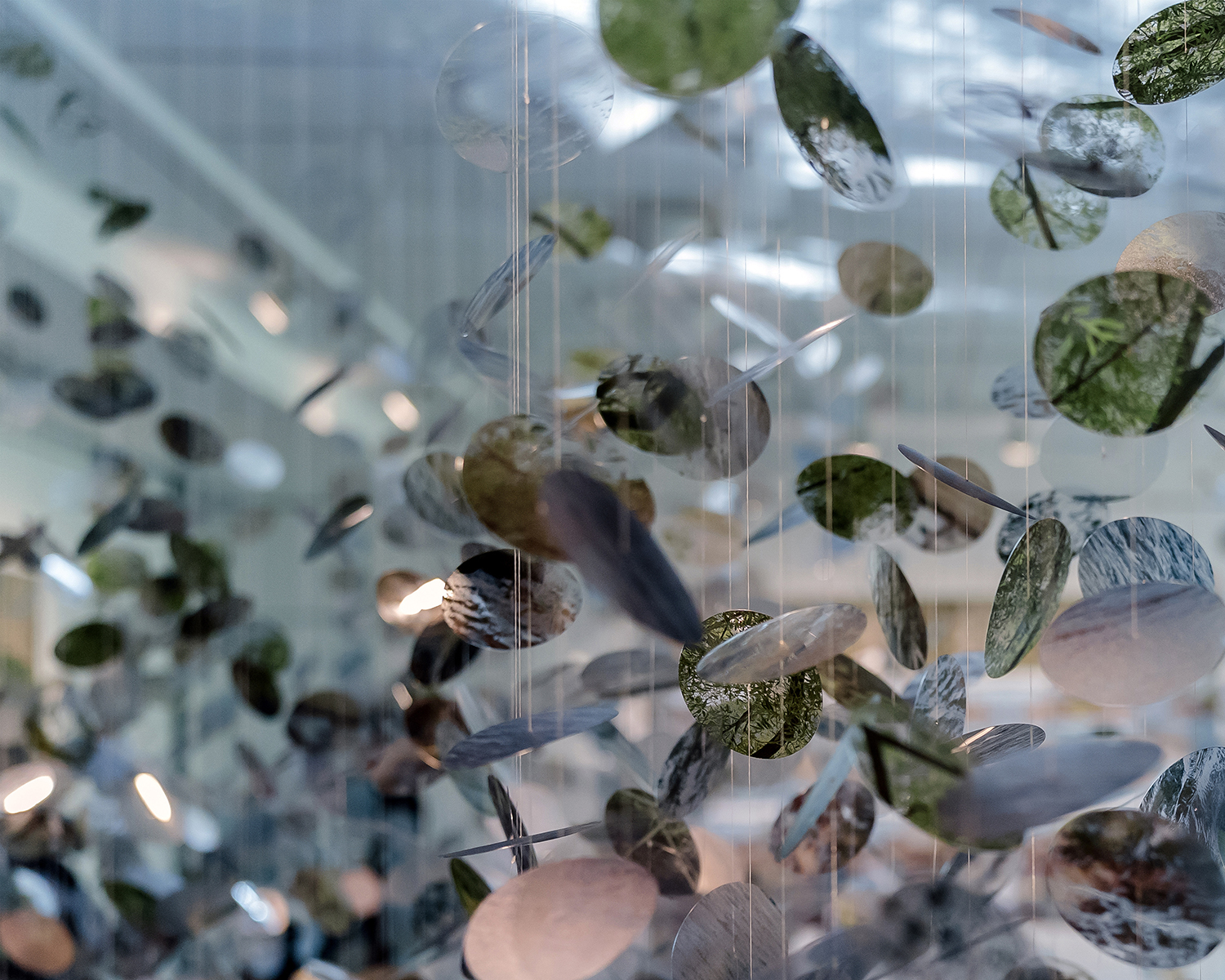
daphne is organizing Hannah Claus’ exhibition at the Canada Gallery, Canada House in London, England, as it offers a unique and valuable opportunity to present the work of an established Indigenous artist whose practice is deeply rooted in Kanien’kehá:ka ways of knowing and being. Through her evocative installations, Claus explores complex themes of relationality—both personal and environmental—drawing on more than two decades of artistic inquiry. This exhibition marks an important milestone in her growing international career and aligns with daphne’s commitment to supporting Indigenous artists on both local and global platforms. Presenting her work in London is particularly meaningful, as it brings together intertwined histories and geographies—linking the Thames and the St. Lawrence River as symbolic and physical waterways of connection. The exhibition invites audiences to consider water not only as a vital resource but also as a spiritual and cultural element central to Indigenous worldviews. For daphne, solo exhibitions are essential in establishing and advancing an artist’s career, and this presentation will expand our reach, deepen our professional relationships, and foster new international collaborations. As Quebec’s first Indigenous artist-run centre, daphne remains dedicated to creating spaces where Indigenous artists can thrive, exchange ideas, and be seen.
daphne beads: perler/parler
2022-2024
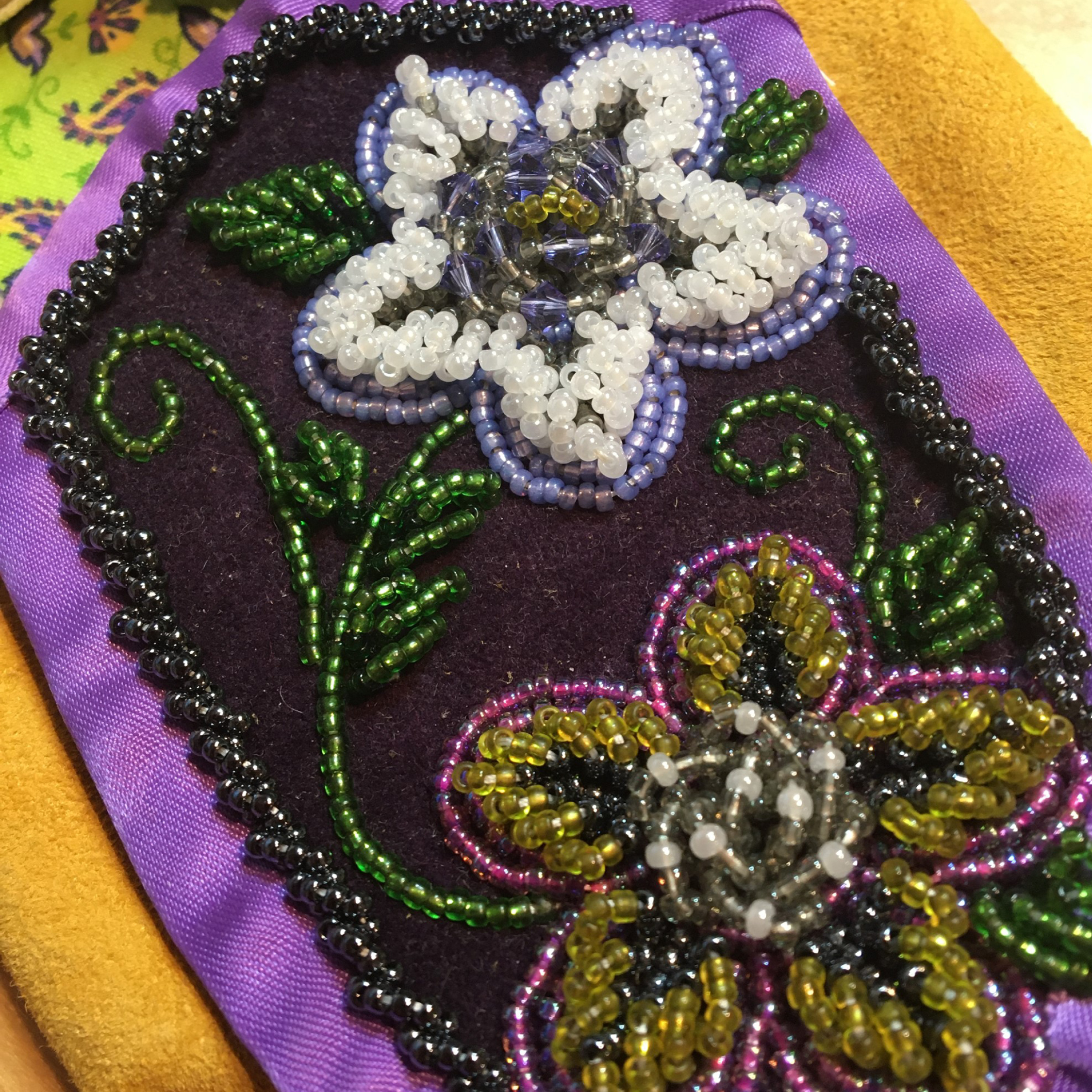
Beading and photo by Skawennati
In the great tradition of gathering around a kitchen table to bead and talk, from 2020 to 2024, daphne hosted a virtual beading night each week. This weekly event was hosted by daphne co-founders Skawennati & Hannah Claus.
When we first envisioned these evenings, we imagined us all together, sitting around a big table, with plenty of beads on hand to share. Because of the pandemic, these evenings were virtual. But we were still able to share ideas and expertise! The point was always to meet and talk art in a relaxed atmosphere while perhaps making something beautiful in the process. We did this and it was beautiful.

Ludovic Boney: Constructive Interference
24.09.19-02.11.19
Curated by Hannah Claus & Nadia Myre
presented by daphne with imagineNATIVE at A Space Gallery, Toronto
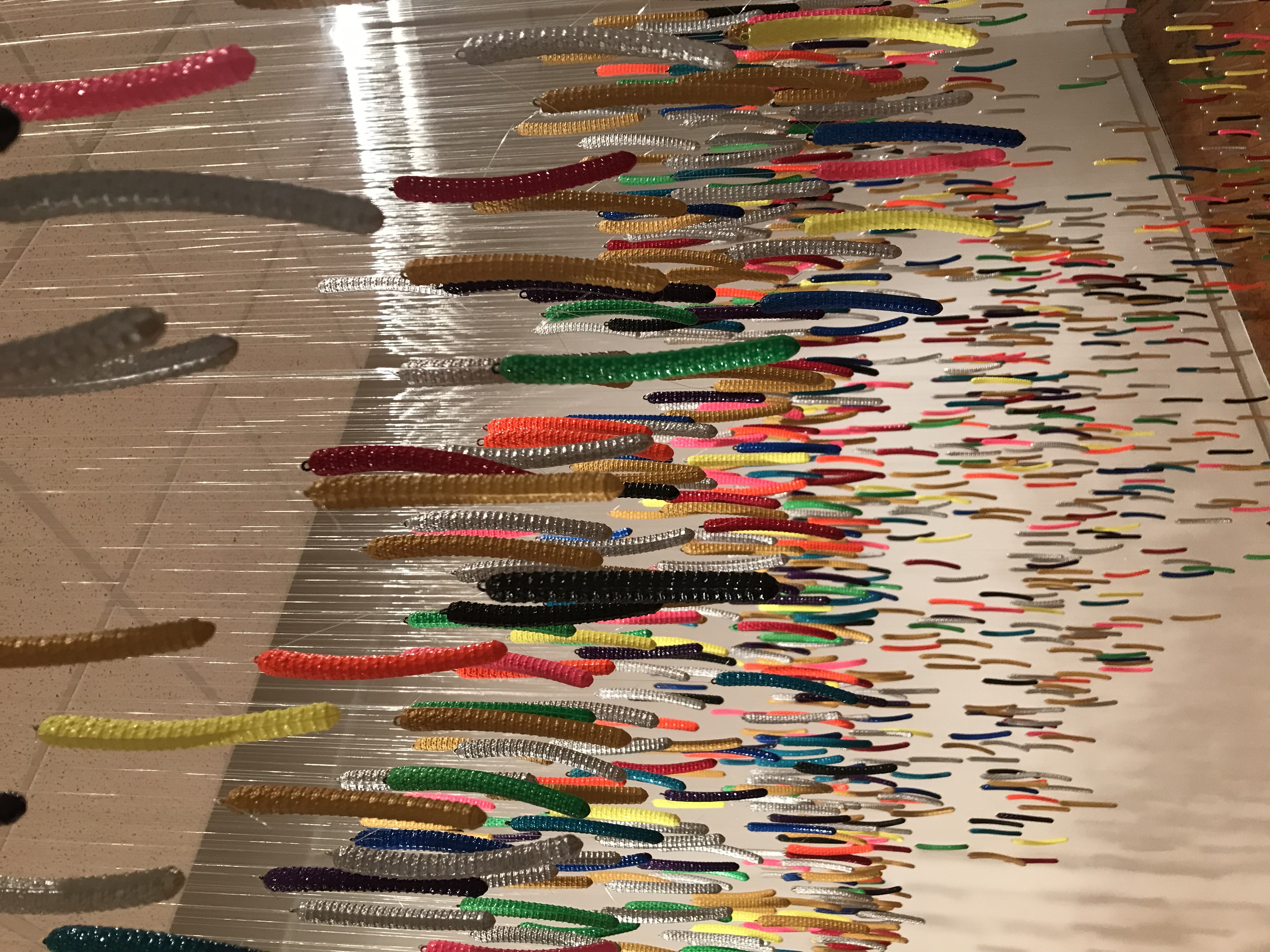
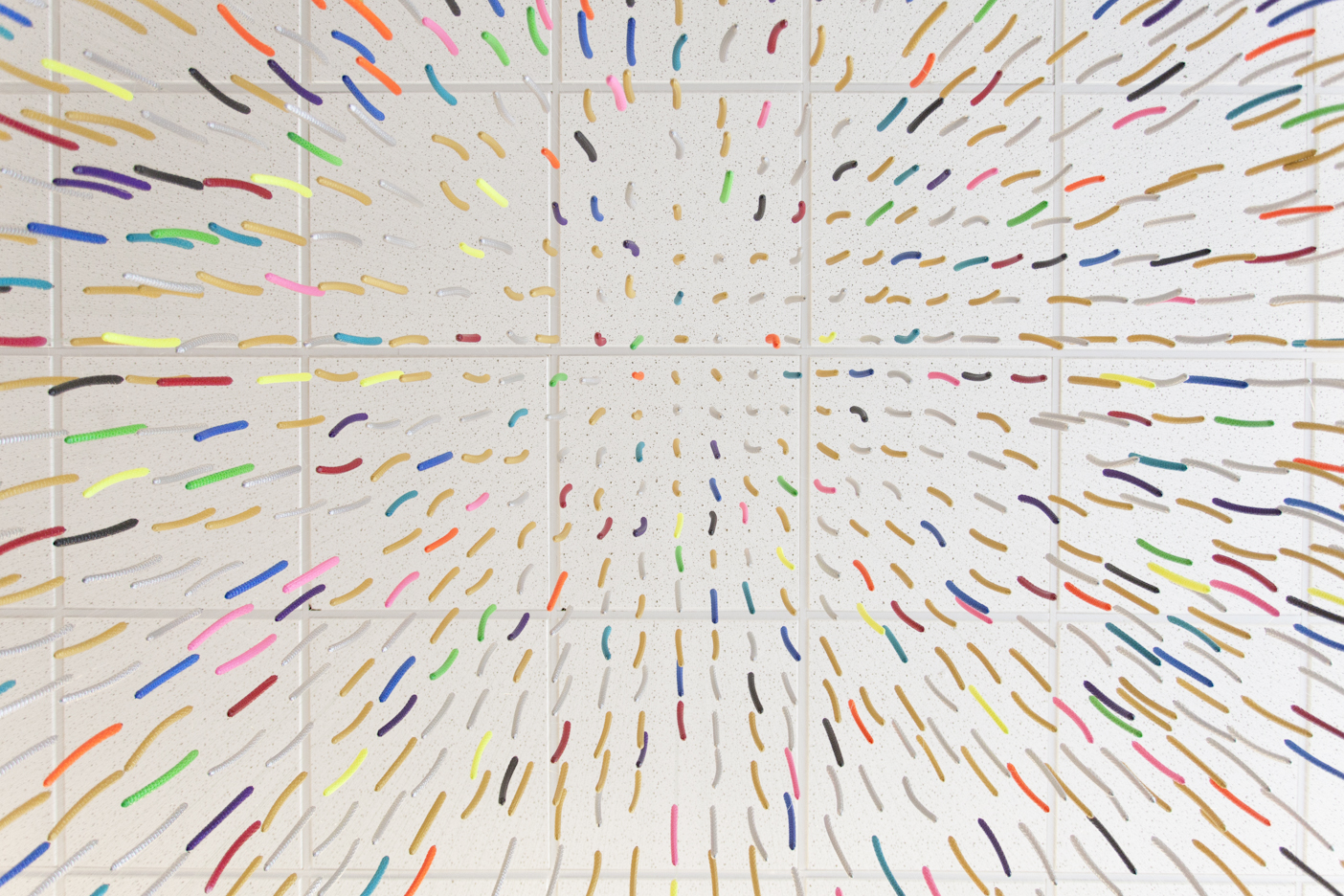
Under the Catkins (2018)
The term “constructive interference” describes the effect of a source sending out pulses of energy that results in the amplification of waves or ripples, whether water or sound. In the exhibition Constructive Interference, Ludovic Boney’s installations amplify the effect of our bodies in the spaces he has created. By extension, we can think about the affect of our actions and reactions, and how these play out both individually and across our society. He directs our attention, our movement and our bodies through his installations to highlight how momentary fragments connect to constructed symphonies of experiential ephemera.
Grounded in memory, the installation Why So Many Ties? is inspired by interactions between the artist and his mother, who each time she gives something to her son, regularly re-uses one of the cheap plastic bags she has on hand, but always finalizes the act by tying the bag using a double knot. These plastic shopping bags are tied so tight, that Ludovic then has to rip them apart to retrieve what is inside. This ritual between mother and son speaks to the preciousness of gifting and goods; the pleasure to give and receive, yet also the mild frustration of having to accept the idiosyncrasies of what is. The artist has purposefully repurposed and translated these ties, these bundles, these bags for this installation, neatly and cleanly cutting out and cutting away, reducing and elevating the ubiquitous plastic skin both physically and aesthetically.
A slice of fabricated landscape: thirty to fifty pine planks elevated from the floor, are laid out in a path that fills the gallery but begins at nothing and leads to nowhere. The interest is not in the destination but in the experience. On either side of the path, integrated to the planks, are thousands of thin rods, six feet high, each crowned with remnants of plastic shopping bags, their coloured logos like the blooms of strange flowers, bulrush-like reeds or the nautical flags of a regatta.
The installation exists as a sculpture in its materiality. The thick pine planks speak of history and civilization as it visually transitions through material hierarchies of wood, metal and plastic. However, it truly comes alive when the viewer engages with the path the artist has prepared for them. As one steps on to the path, the planks creak and bend beneath the body’s weight. The field of rods and plastic forms shift and shiver with each step to trace out the movement from the source. Boney destabilizes the viewer, as his installation literally lifts them out of their physical groundedness and into a place surrounded by sound and stimuli. Once into the middle of the landscape, a recorded soundscape begins, mixing into the immediate physical experience. This audio component, created by distorting and enhancing actual sounds from the installation, both amplifies and frames reality, reminding us of the chaos that can result from just one step.
Under the Catkins, which won the Quebec Arts Council’s 2018 Artwork of the Year Award for the Chaudiere-Appalaches region of Quebec, is comprised of nearly 5000 brightly glazed elongated ceramic slip-cast birch seed pods (also known as catkins), suspend from drop ceiling tiles, like the ones commonly found in office spaces. Placed on the floor, in the centre of the room, is an evergreen wreath, its fresh pine smell permeating the air. Beyond the dizzying optical effect created by the vibrant feast of colour, which, from a distance, might appear to be a swarm of insects in stasis, a topology of clouds, or a floating reverse topography, these dancing ceramic seed pods attached to an office ceiling are at once appeasing, mesmerizing and ridiculous. Seductively playful, materially rich, and evocative of multiple readings, one might wonder how this art gallery/white cube grew such a fascinating tree, or whether we are living in a birchless future, and have imagined what its fruits might be. Or is it simply a celebratory occasion of our enduring adaptive intelligence? These pods, spinning to celestial rhymes, like whirling silk ribbons, like fancy dancing, speaking to our survivance as Indigenous people, and the wreath, a pillow to comfort our heads, a space to gather around, pointing to the continuance of life.
Boney likes to take disparate experiences and mash them together. His interest lies in creating absurd yet transcendent moments in which we might experience alterity; a hyper consciousness of the ways in which we have built our world (both physically and intellectually) as we are forced, with our bodies, to navigate his spatial constructs. In tandem, is an interest in replication and substitution, in the altering and shifting of materials to create meaning. His drive sits in the transformative magic of pragmatism, in the here and now, as we have always done, as people, nations and cultures that survive. Above all, Boney places the awe of the human experience in this world, as a pivotal point. He is motivated by the wonder and amazement of the natural world and takes joy in watching these things: bulrushes swaying in the wind, catkins dancing in the trees. However, in replacing the natural for the fabricated, Constructive Interference conflates the world that we have made against the one that was made for us, jamming our insecurities of futurity into a joyous celebration and leaving us to wonder if our two worlds can, in fact, be reconciled.
Wendat sculptor Ludovic Boney has completed over 20 architectural integration projects in Quebec, including several large-scale public art projects. In 2017, he was long-listed for the Sobey Art Award and won a REVEAL Indigenous Art Award. Currently living in Saint-Romuald, Boney continues to devote his time to his studio practice and public art proposals, exhibiting his work in artist-run centres, galleries, and museums in Quebec and Canada, as well as teaching sculpture at the Maison des Métiers d'Art in Quebec City. This is Boney’s first solo exhibition outside of Quebec.
︎
Hannah Claus and Nadia Myre are professional artists and occasional curators based in Tiohtià:ke / Mooniyang / Montreal. Along with fellow artists-curators Caroline Monnet and Skawennati, they co-founded daphne in 2019 with the mandate to increase the visibility and understanding of contemporary Indigenous within Quebec. This includes increasing the visibility of Quebec-based Indigenous artists within and outside of that province. Constructive Interference is daphne's inaugural curatorial project.